In 1979, a team led by archaeologist Gabriel Barkay was excavating a row of burial caves on Ketef Hinnom, a hillside just southwest of Jerusalem’s Old City. In one of the chambers, a 13-year-old volunteer on the dig made the crucial find. Among the objects buried there were two tiny rolls of silver.
Unrolling them without tearing the metal took painstaking work. Flattened out, the larger one is about four inches long and an inch wide; the smaller is barely an inch and a half long. Scratched into the silver, in the ancient Hebrew script, was a blessing — and the name of God.
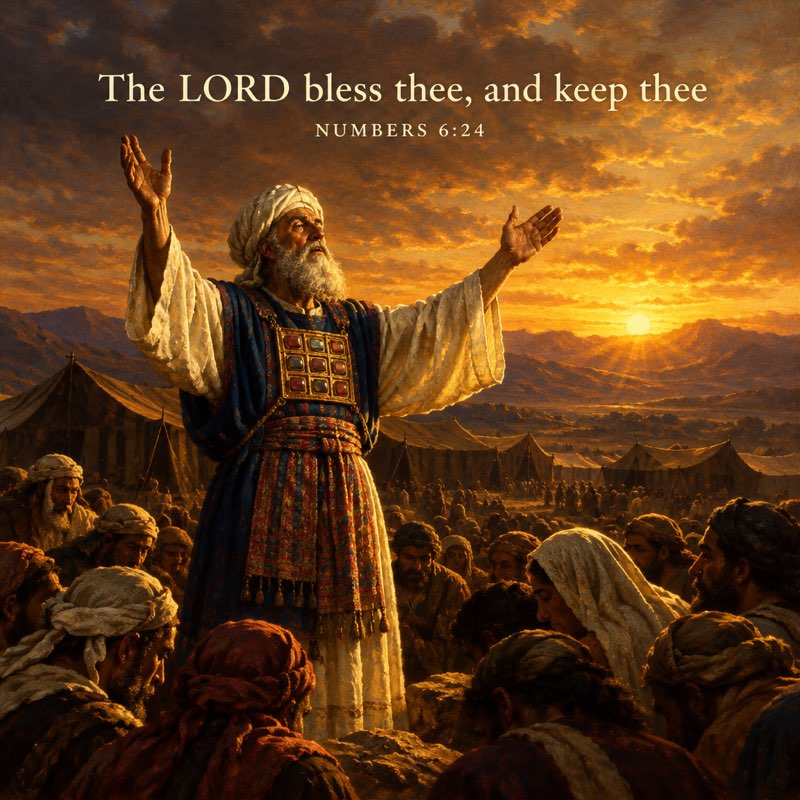
“The LORD bless thee, and keep thee: The LORD make his face shine upon thee, and be gracious unto thee: The LORD lift up his countenance upon thee, and give thee peace.”
It is a version of the priestly blessing from the Book of Numbers. Scholars date the scrolls to around 600 BC, which makes them centuries older than the Dead Sea Scrolls and the oldest text from the Bible ever found.
Buried just before Jerusalem fell
Not everyone agreed with that date at first. In 2004, a team from the University of Southern California re-examined the scrolls with advanced photographic and computer imaging. Their work supported a date just before the Babylonians destroyed Jerusalem in 586 BC.
That puts the scrolls in the days of the prophet Jeremiah. With the Babylonian army closing in, someone in Jerusalem seems to have worn these words — rolled up small, most likely as an amulet — and they went into the tomb with their owner. Soon after, the city and its temple were burned, the grief the Bible records in Lamentations.
Who is doing the blessing
The blessing comes with instructions. God tells Moses to give it to Aaron and his sons, the priests: “On this wise ye shall bless the children of Israel” (Numbers 6:23). Then He adds a promise: “And they shall put my name upon the children of Israel; and I will bless them” (6:27).
Notice who does the blessing. The priests speak, but it is the LORD — named three times — who blesses and keeps, makes His face shine, is gracious, lifts up His countenance and gives peace. The priest only says it out loud.
“Make his face shine upon thee” is the look of someone glad to see you. “Lift up his countenance” is the opposite of turning away. And the last word is peace — in Hebrew, shalom, which means wholeness, not just quiet.
An echo across Scripture
The same hope runs through the Psalms: “God be merciful unto us, and bless us; and cause his face to shine upon us” (Psalm 67:1). Centuries later, Paul closed his second letter to the church at Corinth with a blessing of his own: “The grace of the Lord Jesus Christ, and the love of God, and the communion of the Holy Ghost, be with you all” (2 Corinthians 13:14).
From me to you
For more than 2,500 years, people have carried these words close — in the case of the Ketef Hinnom scrolls, literally. They are also the last verse in the thirty-night evening verse series, because unlike the others, they don’t ask anything of you. They only give.
So tonight, from me to you
The LORD bless thee, and keep thee: The LORD make his face shine upon thee, and be gracious unto thee: The LORD lift up his countenance upon thee, and give thee peace.